Beyond Weight Loss: The Unexpected Benefits of the Shield Method
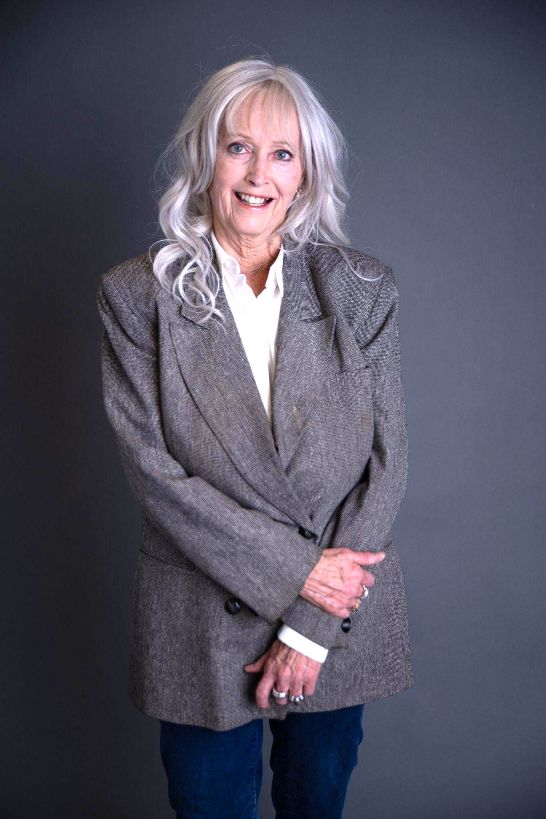
When Dr. Deborah Hill set out to develop a better approach to weight loss, she was solving a specific problem: how to give people reliable, comfortable eating control without the suffering that accompanies traditional dieting.
What she didn’t expect was everything else that came with it.
Dr. Deborah Hill, a board-certified Doctor of Chiropractic based in Los Angeles, had run a focused clinical test of the Shield Method as a weight loss tool. The results on that front were exceptional — 100% of participants confirmed it was the best weight loss method they’d ever used. But as she analyzed the data from her test group, patterns emerged that had nothing to do with food.
The first surprise: 55.17% of participants spontaneously reduced their alcohol consumption by at least 75% — with no training, no instruction, and no specific goal around drinking. It happened as a byproduct of developing the mental “shield” trained by the method.
To understand why, it helps to understand what the Shield Method actually builds. It’s not a set of rules about eating. It’s not a coping strategy or a motivational framework. It’s a form of automatic self-regulation — the same kind humans use for complex, demanding tasks like driving. Once that mental architecture is developed, it doesn’t remain narrowly focused on food. It generalizes.
Willpower, it turns out, is less like a muscle specific to one movement — and more like a general fitness that improves across the board when you train it right.
Some participants reported quitting smoking. One individual took Dr. Hill aside after the program to thank her — he had used the Shield Method techniques to rapidly resolve a long-term behavioral problem in an entirely different area of his life that had resisted other interventions for years.
Dr. Hill was not entirely surprised. She had always believed the method was tapping into something deep and general in human psychology, not just something food-specific. But the scope of the effect was striking even to her.
She is now actively developing new Shield Method programs targeting smoking cessation and alcohol management — formal applications for the general willpower-building that participants were already experiencing naturally.
This expansive quality sets the Shield Method apart from virtually every other weight loss program in existence. Most programs are narrowly designed: eat these foods, avoid those foods, follow this meal plan. The benefits, if they come, are contained. The Shield Method, by contrast, appears to be building something structural in the mind — a generalized capability for self-directed behavior change.
Nora B. hinted at this broader shift in her testimonial, describing how her Shield changed not just her eating, but her whole relationship with daily goals: “My Shield makes working toward my goal a ‘today’ project instead of a ‘tomorrow, always tomorrow’ project.”
Joyce W. identified the self-image dimension: when you begin experiencing consistent successes instead of small daily failures, how you see yourself changes. That psychological shift — from someone who can’t control their behavior to someone who reliably can — has implications that extend far beyond the dinner table.
Judith L. described the transformation plainly: “I have never felt this kind of strong freedom about food before. Compulsive eating is a thing of the past and is no longer a part of my life.”
Freedom. That’s the word that keeps appearing in participants’ accounts. Not restriction. Not discipline. Freedom.
For a method that started as a weight loss tool, the Shield Method has revealed itself to be something considerably more expansive: a training system for becoming a person who is, in a fundamental sense, more in control of their own life.
The online course is available at www.shielders.com. The first 500 qualified applicants can access it for free during the current launch period (regular price: $1,999). Weight loss might be where the story starts. But it’s not where it ends.