News

From Frozen Joints to Food Freedom: The Remarkable Career Path of Deborah Hill, D.C.
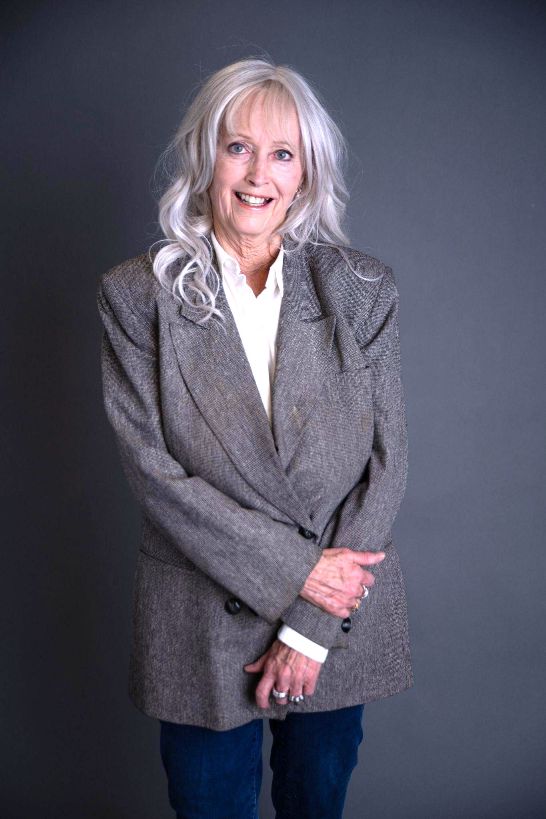
Dr. Deborah Hill
Dr. Deborah Hill

Most weight-loss innovators come from nutrition science, behavioral psychology, or personal fitness. Deborah Hill, D.C. arrived from somewhere far less expected: the treatment of severe, debilitating chronic pain.

As founder and director of West Burbank Chiropractic Center in Los Angeles, she spent years developing Myoprobe Therapy® — a highly specialized hands-on technique that consistently achieved results other practitioners considered impossible. Patients with decades of arthritis, joints so frozen they had accepted permanent limitation, and chronic pain that had outlasted years of medication responded to her treatments in ways that moved them to tears. Her office walls became a mosaic of handwritten thank-you letters from people who thought they’d never move normally again.

Mind-body connection was central to her chiropractic work from the very beginning. She regularly taught patients simple mental techniques to help manage pain between visits. This practice opened a door she had never anticipated.

Patients who used these exercises began showing up to follow-up appointments having lost significant weight — not because they had changed their diets or started new exercise routines, but because something in their mental relationship with food had quietly, fundamentally shifted. Cravings that had controlled them for years had simply loosened their grip.

That pattern, observed repeatedly, became the seed of the Shield Method — a structured program for activating the brain’s built-in self-control and directing it intentionally toward food choices.

What emerged in clinical testing pushed things even further. Without any coaching or curriculum on alcohol, more than 55% of participants in one large test group reduced their drinking by 75% or more. Others quit smoking independently. One participant privately credited the program with resolving a long-standing compulsive behavioral issue that years of dedicated therapy had been unable to address. None of this had been the plan. Dr. Deborah Hill had simply set out to reduce chronic pain — and in doing so, appears to have uncovered a far broader mechanism for reshaping human behavior at its root.

Beyond Weight Loss: The Unexpected Benefits of the Shield Method

Dr. Deborah Hill
Dr. Deborah Hill

When Dr. Deborah Hill set out to develop a better approach to weight loss, she was solving a specific problem: how to give people reliable, comfortable eating control without the suffering that accompanies traditional dieting.

What she didn’t expect was everything else that came with it.

Dr. Deborah Hill, a board-certified Doctor of Chiropractic based in Los Angeles, had run a focused clinical test of the Shield Method as a weight loss tool. The results on that front were exceptional — 100% of participants confirmed it was the best weight loss method they’d ever used. But as she analyzed the data from her test group, patterns emerged that had nothing to do with food.

The first surprise: 55.17% of participants spontaneously reduced their alcohol consumption by at least 75% — with no training, no instruction, and no specific goal around drinking. It happened as a byproduct of developing the mental “shield” trained by the method.

To understand why, it helps to understand what the Shield Method actually builds. It’s not a set of rules about eating. It’s not a coping strategy or a motivational framework. It’s a form of automatic self-regulation — the same kind humans use for complex, demanding tasks like driving. Once that mental architecture is developed, it doesn’t remain narrowly focused on food. It generalizes.

Willpower, it turns out, is less like a muscle specific to one movement — and more like a general fitness that improves across the board when you train it right.

Some participants reported quitting smoking. One individual took Dr. Hill aside after the program to thank her — he had used the Shield Method techniques to rapidly resolve a long-term behavioral problem in an entirely different area of his life that had resisted other interventions for years.

Dr. Hill was not entirely surprised. She had always believed the method was tapping into something deep and general in human psychology, not just something food-specific. But the scope of the effect was striking even to her.

She is now actively developing new Shield Method programs targeting smoking cessation and alcohol management — formal applications for the general willpower-building that participants were already experiencing naturally.

This expansive quality sets the Shield Method apart from virtually every other weight loss program in existence. Most programs are narrowly designed: eat these foods, avoid those foods, follow this meal plan. The benefits, if they come, are contained. The Shield Method, by contrast, appears to be building something structural in the mind — a generalized capability for self-directed behavior change.

Nora B. hinted at this broader shift in her testimonial, describing how her Shield changed not just her eating, but her whole relationship with daily goals: “My Shield makes working toward my goal a ‘today’ project instead of a ‘tomorrow, always tomorrow’ project.”

Joyce W. identified the self-image dimension: when you begin experiencing consistent successes instead of small daily failures, how you see yourself changes. That psychological shift — from someone who can’t control their behavior to someone who reliably can — has implications that extend far beyond the dinner table.

Judith L. described the transformation plainly: “I have never felt this kind of strong freedom about food before. Compulsive eating is a thing of the past and is no longer a part of my life.”

Freedom. That’s the word that keeps appearing in participants’ accounts. Not restriction. Not discipline. Freedom.

For a method that started as a weight loss tool, the Shield Method has revealed itself to be something considerably more expansive: a training system for becoming a person who is, in a fundamental sense, more in control of their own life.

The online course is available at www.shielders.com. The first 500 qualified applicants can access it for free during the current launch period (regular price: $1,999). Weight loss might be where the story starts. But it’s not where it ends.

The Neurological Foundation That Makes the Shield Method Different

Dr. Deborah Hill
Dr. Deborah Hill

Most people marvel at how effortlessly they can pilot a vehicle through dense traffic at 70 mph, reacting instantly to sudden lane changes or braking trucks, yet feel completely helpless when facing a plate of cookies. This striking contrast inspired a Los Angeles-based chiropractor to develop a radically different approach to eating behavior.

Dr. Deborah Hill spent years treating patients with debilitating conditions—frozen shoulders, advanced arthritis, and severely limited mobility—using her proprietary Myoprobe Therapy®. While guiding individuals through complementary mind-body awareness exercises to support physical healing, she noticed a consistent secondary outcome: many began returning to appointments significantly lighter, often without making any conscious effort to diet.

Intrigued by the pattern, she explored the brain science behind it. The nervous system already contains a highly reliable subsystem dedicated to calm, accurate regulation under pressure. Driving is the clearest real-world demonstration—near-100% success rates, sustained for hours, with almost no emotional friction or self-coaching required. The Shield Method teaches people how to deliberately access and re-purpose this same subsystem for nutrition-related decisions.

Once engaged, the technique creates an almost instantaneous mental boundary that quiets rising impulses before they escalate into full cravings. Portions become naturally appropriate, stopping feels instinctive rather than heroic, and the entire process remains emotionally neutral—no drama, no sacrifice, no lingering sense of missing out.

Early adopters frequently describe the shift as surprisingly rapid. Some notice meaningful changes within days; others achieve substantial weight reduction over weeks or months while maintaining a steady, unruffled relationship with food. The absence of internal tug-of-war proves especially refreshing after years of willpower-based attempts that left them exhausted.

Testing also uncovered unexpected collateral benefits. In one sizable cohort, more than 55% of participants reduced alcohol consumption by at least 75% without receiving any alcohol-specific instructions. Several individuals stopped smoking completely, and a few reported resolution of other long-standing compulsive patterns.

Deborah Hill, D.C. explains that these wider improvements stem from strengthening the brain’s general capacity for self-governance rather than targeting isolated habits. The Shield Method essentially upgrades the default setting for behavioral control across domains.

Delivered through The Shielders Company (currently operating in Los Angeles and Las Vegas, with nationwide expansion planned after the ongoing third clinical trial), this system continues to gain attention for its alignment with how the nervous system is already wired to succeed.